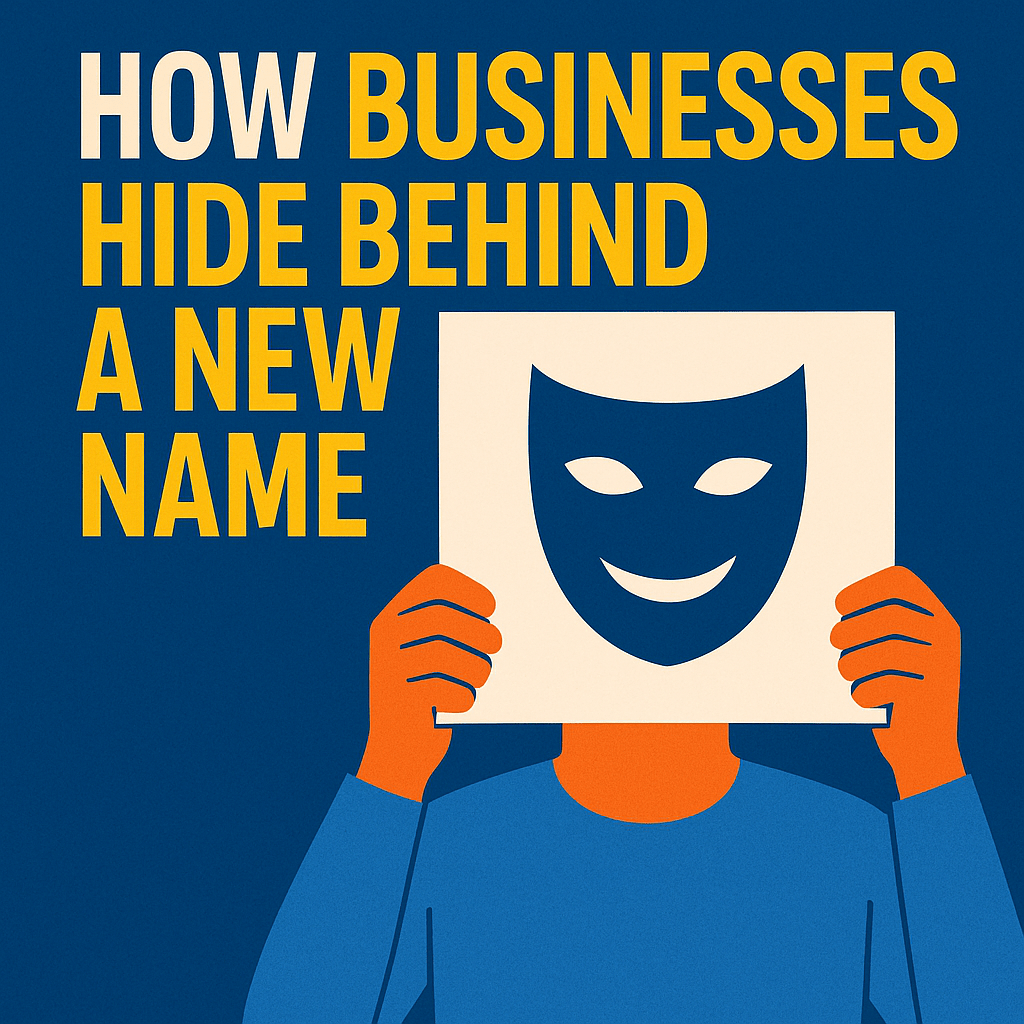
In the world of business, reputation is paramount. When a business faces allegations of misconduct, mismanagement, or financial difficulties, the consequences can be severe, including loss of customers, legal action, and even closure. Some sole traders and limited companies, rather than formally winding down or addressing these issues transparently, attempt to sidestep reputational damage by simply trading under a new name. This practice, while not illegal in itself, can be ethically questionable and, in some cases, used to deceive customers or creditors.
What Does It Mean to Trade Under Another Name?
Sole traders and limited companies in the UK and many other jurisdictions are allowed to operate under a “trading as” name. This is a name different from their legal name, which they use for branding and public-facing activities.
For example:
- John Smith t/a “Quick Fix Plumbing”
- ABC Holdings Ltd t/a “Budget Motors”
This can be perfectly legitimate, allowing businesses to create brand identities without changing the legal structure. However, when used to obscure past misconduct, this practice enters a grey area.
Why Do Businesses Use This Tactic?
1. Avoiding Reputational Damage
Businesses that have been subject to bad reviews, regulatory warnings, or public scandals may rebrand to shed the baggage associated with their previous name.
2. Evading Debts and Legal Claims
While a new trading name doesn’t erase debts or liabilities, some businesses hope that operating under a different name will make it harder for creditors or claimants to track them down.
3. Reaching New Customers
Sometimes businesses rebrand to attract new audiences who are unaware of their past issues, effectively starting with a “clean slate.”
Legal Implications
Is it Legal?
Yes, in principle. There is nothing illegal about using a different trading name. However, businesses must not use the new name to mislead customers about their identity, history, or legal status.
For example:
- Passing off an old company as a completely new entity without disclosing continuity might violate consumer protection laws.
- Failing to make clear the legal entity behind a trading name could breach the Companies Act 2006 and Business Names Regulations 2015 in the UK.
Fraudulent Trading
If a company is using a new name to knowingly continue dishonest or fraudulent activities, directors could be personally liable under Section 993 of the Companies Act 2006, which deals with fraudulent trading.
Director Disqualification
The Company Directors Disqualification Act 1986 can apply where directors attempt to continue business in a misleading manner, particularly if they were previously involved in insolvency or mismanagement.
Sources:
- Companies Act 2006 – Fraudulent Trading (Section 993)
- Business Names Regulations 2015
- Company Directors Disqualification Act 1986
Red Flags: How to Spot a Business That Is Trying to Rebrand Away from a Tainted Past
- Recently Registered Domain or Brand but Long History of Complaints Under a Different Name
- Different Trading Name but Same Directors, Address, or Contact Details
- Negative Reviews Disappear from Platforms but Remain on Archived Pages or Forums
- Use of Multiple Trading Names Simultaneously, Particularly in Similar Industries
Example:
Businesses like rogue builders, debt management firms, or mismanaged care homes have historically used this tactic to restart without addressing the underlying issues.
Regulatory Oversight and What Can Be Done
Regulators such as the Insolvency Service, Trading Standards, and the Financial Conduct Authority (FCA) have powers to investigate and sanction individuals or entities using trading names deceptively.
Consumers and businesses can:
- Check company details on Companies House: https://www.gov.uk/get-information-about-a-company
- Look for director names and cross-reference them with known companies or scandals
- Use online tools like DueDil, OpenCorporates, or CheckaCompany
The Real-World Impact of Misleading Rebranding: Industry Hotspots and Risks
The use of alternate trading names to hide past business failures or misconduct is not restricted to one sector. However, certain industries are more prone to this deceptive practice due to the nature of their services, regulatory scrutiny, or the ease with which they can reposition themselves.
High-Risk Sectors
Construction and Home Improvement
The construction and home improvement industries are notorious for companies folding overnight and resurfacing under new names. From cowboy builders to substandard contractors, it is common for sole traders and small firms to accumulate customer complaints, county court judgments (CCJs), or bad press, only to reappear days later under a new brand.
Financial Services and Debt Management
Debt management firms, payday lenders, and forex trading platforms have been heavily regulated in recent years. As a result, some unscrupulous operators, faced with FCA investigations or negative media exposure, attempt to close down and re-emerge under different trading names. These schemes target vulnerable consumers looking for debt solutions or quick financial gains.
Care Homes and Health Services
In the care sector, businesses facing allegations of poor conditions or regulatory violations have also been found to close one home or brand and reopen elsewhere under a new trading name. This practice puts some of the most vulnerable people in society at risk.
E-commerce and Retail
Online scams often use disposable domain names, but even some established e-commerce businesses with poor customer service records attempt to rebrand by creating new trading names, using similar products or websites, often registered to the same directors or addresses.
Regulatory Blind Spots and Challenges
Gaps in Enforcement
Although regulators like the FCA, Insolvency Service, and Trading Standards do have powers to investigate companies and directors, enforcement remains reactive rather than proactive. It often relies on reports from consumers, competitors, or the media.
Directors disqualified under the Company Directors Disqualification Act 1986 are barred from managing companies directly or indirectly, but some attempt to circumvent this by using front people, nominee directors, or operating as “shadow directors.”
Difficulty for Consumers
Even with online tools like Companies House, many consumers do not know how to check a company’s background or cross-reference director names, registered addresses, or past company names. This leaves them exposed to repeat offenders who exploit these loopholes.
Strengthening the Shield: The Push for Transparency
There have been calls for stricter transparency laws, including:
- Mandatory disclosure of any previous trading names and directorships on public records.
- Clearer labeling requirements when using a “trading as” name.
- Tougher penalties for directors caught misleading the public or regulators.
International Lessons
Other countries have also faced these challenges. For example:
- In Australia, the Australian Securities and Investments Commission (ASIC) maintains more detailed director histories and offers better integration between company, director, and business name searches.
- The EU has been strengthening cross-border corporate transparency through initiatives like Beneficial Ownership Registers.
While the UK has made progress with its Corporate Transparency and Register Reform proposals, implementation has been slow, and critics argue that rogue operators are still one step ahead of enforcement.
🚩 Quick Guide: Spotting Businesses Trying to Hide Behind a New Name
- Verify the legal name behind any trading name via Companies House.
- Research the directors—check if they were linked to failed or banned businesses.
- Look up old reviews and forums for complaints linked to the same people or contact details.
- Compare addresses, emails, or websites with known problematic firms.
- Ask directly about business history—vague answers are a red flag.
- Check for regulatory warnings (FCA, Trading Standards, Insolvency Service).
- Be cautious of aggressive or too-good-to-be-true offers.
Final Thoughts
While using a trading name is a legitimate business tool, its misuse to obscure past misconduct or financial failure erodes trust in commerce and poses risks to consumers and other businesses. Vigilance, due diligence, and awareness of these practices are essential to protect against bad actors trying to reinvent themselves without accountability.
The Toolbox: 9 Ways to Fight Back Without Moving to Mars
- Shelter England – england.shelter.org.uk — 0808 800 4444.
- Citizens Advice Redditch & Bromsgrove – citizensadviceredditch.org.uk.
- TSUK Letters Templates – TenantSupportUK.com
- ACORN Community Union – acorntheunion.org.uk.
- Generation Rent – generationrent.org.
- Renters Reform Coalition – rentersreformcoalition.co.uk.
- Housing Ombudsman Service – housing-ombudsman.org.uk.
- Redditch Borough Council Housing Solutions – redditchbc.gov.uk/housing or call 01527 587 000.
- Tenancy Deposit Schemes – depositprotection.com (DPS) • tenancydepositscheme (TDS) • mydeposits.co.uk (MyDeposits)
Tenant Support UK

 Tenant Support UK
Please, leave your comment here